
A Journey Through Decades of Energy Transformation
Energy, or fuel, is the invisible force that powers nearly everything we do – cooking our meals, warming our homes, moving us from place to place. Since the end of 2025, we have been on a journey through the decades of energy transformation in India.
In Part One, we looked at the “Kitchen Revolution,” examining India’s transition from biomass to cleaner fuels like LPG. Part Two explored the challenges of “Heating in a Warming Climate,” and Part Three reviewed the “Railway Revolution.”
Today, India stands transformed. Over 329 million households cook with LPG. Railways have electrified over 99% of their network. Over ~7 million electric vehicles move through streets that once knew only bullock carts and diesel fumes.
This is the story of India’s fuel evolution—told not from spreadsheets and policy documents alone, but from memory, from experience, from the kitchen to the trains—to the roads of tomorrow.
Part IV: Roads and the Electric Vehicle Revolution
The Motor Age (1897–Present)
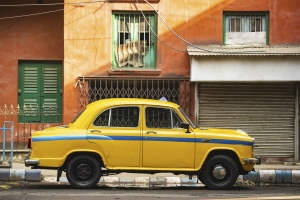
India’s first automobile arrived in 1897, imported by a Parsi businessman in Mumbai. For decades, motor vehicles remained rare luxuries—imported, expensive, and limited to the wealthy and the colonial administration. Independence brought ambitions of self-reliance: Hindustan Motors began producing the Ambassador in 1958, and Premier Automobiles launched the Padmini, both of which would dominate Indian roads for decades.
These early Indian cars ran on petrol, as did the scooters (Bajaj, Lambretta) and motorcycles that became the dominant form of personal transport for the growing middle class. Diesel found its niche in commercial vehicles—trucks, buses, and later, passenger cars marketed for their fuel economy.
India’s vehicle fleet exploded after economic liberalization in 1991. From roughly 20 million registered vehicles in 1991, the fleet grew to 300 million by 2019 and continues climbing. Two-wheelers dominate, comprising about 75% of all vehicles, followed by cars (13%), commercial vehicles (5%), and three-wheelers (4%).
The EV Transition (2020–Present)
The electric vehicle revolution in India began tentatively but is now accelerating beyond most projections. The National Electric Mobility Mission Plan of 2013 set early targets; the FAME (Faster Adoption and Manufacturing of Electric Vehicles) schemes of 2015 and 2019 provided subsidies and infrastructure support.
But the inflection point came around 2020-2021, when several factors aligned: battery costs fell below critical thresholds, domestic manufacturers launched competitive products, charging infrastructure expanded, and government policy tightened emissions standards while offering EV incentives.
The numbers reveal a transformation in progress:
- 2020: EVs represented approximately 0.7% of total vehicle sales
- 2025: EVs reached over 7% of total vehicle sales; over 2 million units sold
- Cumulative: Over 7 million EVs now registered on Indian roads
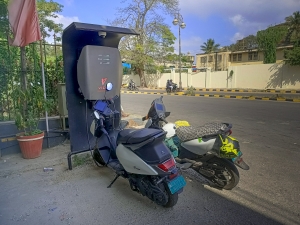
Electric two-wheelers lead the charge, representing over 60% of EV sales—fitting for a country where two-wheelers dominate personal transport. Electric three-wheelers (auto-rickshaws) have also surged, particularly in smaller cities. Four-wheeler EVs are growing fastest in percentage terms but from a small base.
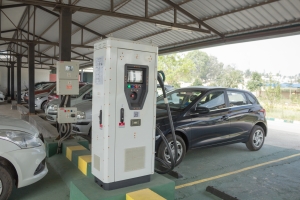
The charging infrastructure is expanding rapidly: from barely 1,000 public chargers in 2020 to over ~25000+ by 2025, with ambitious targets for 50,000+ by 2027. Companies are experimenting with battery swapping for two- and three-wheelers, home charging solutions, and fast-charging corridors along highways.
Looking Forward: The Unfinished Revolution
India’s energy transformation is ongoing, and the last mile remains the hardest. Ensuring that every household can afford to cook with clean fuel regularly; that every railway line runs on electricity; and that electric vehicles become accessible to middle-class families, is a project of immense proportions.
But the trajectory is clear. A country that moved 97% of its rural population off biomass cooking in just three decades, that electrified over 99% of the world’s fourth-largest railway network, that went from negligible EV sales to over 2 million annually in five years—that country has demonstrated its capacity for transformation at scale.
For energy professionals, investors, and policymakers watching India, the lessons are profound. Change happens slowly, then suddenly. Infrastructure investments compound over decades. Government policy, when sustained and well-designed, can reshape the choices available to hundreds of millions of people.
For those of us who remember the wood smoke and the steam trains, who lived through the transitions from kerosene to LPG, from diesel to electric—this is not abstract history. This is the story of how we live now; written in the fuels we burn and the energy we consume.
The revolution continues.
India’s Fuel Revolution: Part Four
By Kevin Josh