Talk About Tariffs . . . Again
“Starting on August 1, 2025, we [the United States of America] will charge Japan a tariff of only 25% on any and all Japanese products sent into the United States, separate from all Sectoral Tariffs. Goods transshipped to evade a higher Tariff will be subject to that higher tariff.”
This statement comes from the White House letter to the Prime Minister of Japan, dated July 7, 2025.
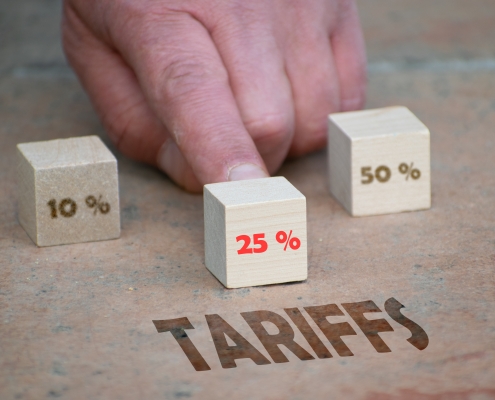
The Market’s Quasi-Calm Breaks as July 9th Deadline Looms
It wouldn’t be a current event in 2025 if tariffs weren’t mentioned. For the last two months the market has seemed quasi-calm as the discussion of tariffs faded but did not disappear. With the July 9th deadline looming for nations to make their deals with the United States and “resolve” their proposed tariffs, the markets have been expecting some form of action.
As the statement above indicates, the plan is to apply a 25% tariff to Japan. However other nations such as South Korea, Malaysia, Kazakhstan, South Africa, Laos, and Myanmar also received notice to expect healthy tariffs. Another seven nations may receive similar news within hours.
The “Ultimate Game of Chicken”
In previous Current Events posts (February, April, May), we highlighted some of the potential impacts of tariffs. We won’t go over those effects again in this post. Instead, we want to note that the current proposed tariffs might be playing the “ultimate game of chicken” with the United States Federal Reserve.
Harsh Criticism Over Federal Reserve’s Caution
Even before his second term began, President Trump was a harsh critic of Federal Reserve Chairman, Jerome Powell. The president was especially critical of the Federal Reserve’s hesitation to lower interest rates. The cry has been that high interest rates are costing the U.S. government billions of dollars, stymieing economic growth, and holding back capital decisions.
Powell and the Federal Reserve Board have been extremely cautious. Only their last meeting hinted at small reductions in the future, but no certainty was given. Here is where tariffs come in.
One of the major reasons that the Federal Reserve has held interest rates higher for longer than usual, is the potential tariffs. The proposed tariffs could have an unknown ripple effect on the economy. From this perspective, President Trump’s hardline stance with nations, many of which have been longtime allies, could also be seen as a hardline stance with Powell.
Hardline Trade Stance Could Turn Chairman Powell into a “Lame Duck”
Powell’s term as Chairman of the Federal Reserve expires in May 2026. With no real ability to fire Powell, President Trump’s hardline trade stance may allow for a faster “replacement” to be named and could turn Powell’s last few months into a “lame duck” session.

Why This Matters
Why is this important for the energy sector?
- First, tariffs do have an impact and will affect commodity costs.
- Second, tariffs, from a historical viewpoint, do have the ability to provide some negative impacts on economic growth.
- Third, an early replacement for Federal Reserve Chairman Powell could move the Federal Board viewpoint toward lowering interest rates.
Any lowering of interest rates can be seen as bullish for future economic growth and also for energy products. What’s key in all of this is timing.
Conclusion
Right now, we will feel economic pain in the next few months. However, it will be possible to push for change in late third-to-fourth quarter of 2025. There is hope for lower interest rates going into 2026. Lower interest rates would lead to a more positive economic outlook heading into summer and fall of 2026, just in time for the next U.S. election cycle.
These are the reasons we continue to watch and analyze tariff impacts. We want to be prepared for how the energy markets of the future could, or will, react. Keep watching for more insights on current events and how they could impact you and your business.
Current Events – July 2025
By JD Buss