Bangladesh’s Energy Transition: Part Two

Bangladesh and US flags; Bangladesh LPG

The next decade in Bangladesh will be built by Bangladeshis. It will be supplied, in significant part, by Americans.

Bangladesh’s Energy Transition and the Decade That Will Define It

A few weeks ago, we began our exploration of Bangladesh’s Energy Transition.  Part One looked at the current energy situation in Bangladesh. Shrinking natural gas resources, a large population, and a growing demand for energy have created the perfect conditions for LPG to be an increasingly vital part of the nation’s energy mix.

In Part Two, we will complete our exploration by taking a closer look at how Bangladesh gets the LPG it consumes, and how shifting trade routes can define the future. Bangladesh’s energy transition is still in process. The next decade will be shaped not by a single dramatic event, but by a million quiet choices. The next decade in Bangladesh will be built by Bangladeshis. It will be supplied, in significant part, by Americans.

The Routes that Define the Future

Because Bangladesh imports roughly 95 percent of the LPG it consumes— the question of where the molecules come from, and how they get here, is not a technical footnote. It is the defining strategic question of the decade.

History of Bangladesh’s LPG Supply Routes

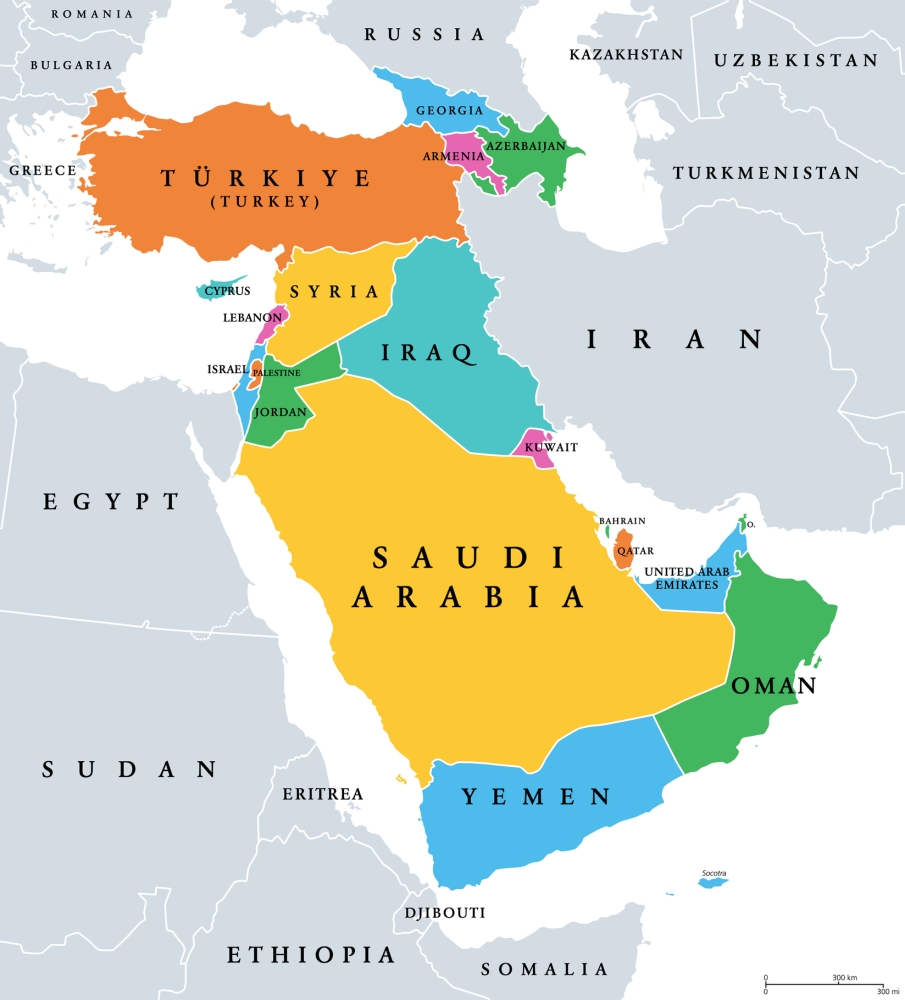
For most of the last fifteen years, the answer was simple: the Middle East. Saudi Arabia, the United Arab Emirates, and Qatar produced abundant propane and butane as by-products of their crude oil and natural gas industries. Pricing was mostly anchored to a single benchmark — the Saudi Aramco Contract Price, or CP – published on the first day of each month and watched, in Dhaka and Chattogram, with the same attention a farmer pays to the monsoon. Cargoes sailed from Ras Tanura and Jebel Ali through the Strait of Hormuz, around the Indian peninsula, and into the Bay of Bengal. It was a route the industry had taken for so long that it had stopped being noticed as a route at all.

Then the world changed.

For the majority of the past 15 years, Bangladesh received most of its LPG from the Middle East.

First, change happened slowly with the growth of US LPG exports providing another supply option.

US flag in background with oil/LPG storage in foreground; 2026 what to expect energy; Bangladesh LPG changing routes

Slow Change: US LPG Export Growth Gives Bangladesh Supply Options

It changed slowly, then quickly. On the slow side, the United States — through more than a decade of shale gas development — became, almost without anyone in Asia noticing at first, the largest LPG exporter in the world. Vast volumes of propane and butane began flowing out of terminals in Houston, Nederland, Marcus Hook, and Ferndale. This product was priced not against the Saudi benchmark but against an American one: Mont Belvieu, a small Texas town whose salt caverns store more LPG than most countries consume in a year. For a Bangladeshi importer, this meant something quietly revolutionary. There was, for the first time, a second pricing pole in the world — a genuine alternative origin, with its own supply curve, its own logic, and at times its own substantial discount.

Quick Change: Geopolitics Creates Need to Shift Trade Routes

On the quick side, geopolitics arrived. The Strait of Hormuz — that narrow ribbon of water through which roughly a fifth of the world’s seaborne petroleum traffic must pass — has spent much of the past year as the most-watched waterway on Earth. When that strait is questioned, even momentarily, every importer downstream of it asks the same uncomfortable question: what if? And the answer to what if? is no longer “there are no alternatives.”

The answer is:

  • the Atlantic Basin,
  • the United States,
  • a route around the Cape of Good Hope — longer in nautical miles, but immune to the chokepoints that the old route depended on.

Then, geopolitical issues created a need to shift trade routes quickly.

LPG carrier ship on the ocean; Bangladesh energy LPG

The shift is already visible in the trade data. And the infrastructure is catching up to the geography.

market graph on screen; hands making notes on pad with a desk

Change: Visible in the Trade Data

The shift is already visible in the trade data. According to figures cited by The Daily Star, the United States accounted for roughly 44 percent of Bangladesh’s LPG imports in 2023. That share dipped through 2024 and 2025 as supply chains reshuffled. In the first two months of 2026, however, US-origin product accounted for nearly 62 percent of imports — a more than threefold rebound in a matter of months. Imports from the UAE, Malaysia, Saudi Arabia, and Iraq have correspondingly declined. This is not a fluctuation. It is a tectonic reorientation, happening in real time.

Change: Investing in the Future

And the infrastructure is catching up to the geography. Bangladesh’s first refrigerated LPG terminal — a deep-water facility at Matarbari, designed to receive the very large gas carriers that today must break bulk far offshore — is moving from blueprint into reality, with a target reduction in import and distribution costs of $35 to $40 per tonne. A master plan for Matarbari Phase II, including expanded LNG and LPG terminals, has been folded into the national port strategy. Mongla, Payra, and Chattogram are being integrated into a Port Community System. These are the kinds of investments that take a decade to plan and a generation to repay — and they are being made now, in this decade, for the country Bangladesh will be in 2035.

The Decade Ahead

The Kitchen in Dhaka

Picture this one more time.

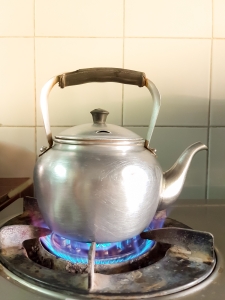
It is 2035. That same kitchen in Mirpur. Same blue flame with the kettle going on the stove just before seven. But the molecules in the burner have travelled, on average, a different route. They have come, increasingly, from the US Gulf Coast, around the Cape, into a deep-water terminal at Matarbari, and down a coastal pipeline to a bottling plant nearer the city. These molecules have been priced against two benchmarks, not one. They have been hedged, optimized, and routed by a national LPG sector that has matured from a scattering of importers into a serious commercial industry. These molecules cost less, in real terms, than they do today. And they will not have been interrupted by events thousands of miles away.

That is not a forecast. It is a possibility — one of several — and it is the one that, in our view at Westlark Advisors, the data most strongly supports.

In 2035, in that same kitchen in Mirpur there is a blue flame with a kettle on the burner. But the molecules in the burner have travelled a very different route.

aluminum kettle on gas burner; Bangladesh energy LPG

Getting there will require choices.

black shoes on road with 3 white arrows pointing in different directions; Bangaldesh LPG changing routes

Choices to Shape the Future

Getting there will require choices.

Choices:

  • By Bangladeshi importers about supplier diversification, contract structure, and hedging discipline.
  • By US suppliers about whether to treat South Asia as a destination of opportunity or a market of last resort.
  • By policymakers about infrastructure, regulation, and the quiet but enormous work of building institutional capacity in a sector that has grown faster than the rulebook governing it.

None of these choices are dramatic. All of them are consequential.

History, it has been said, is not made in a single day. It is built on the choices made between one day and the next, by people who often do not realise they are making history at all.

The woman in the Mirpur kitchen is one of them. So is the trader in Dhaka watching the Saudi CP announcement at dawn on the first of the month. So is the terminal operator in Texas filling a cargo bound for Matarbari. And the policy official in Dhaka deciding which terminal gets approved next.

Bangladesh’s energy story over the next decade will not be a single, dramatic event. It will be a million quiet ones, each in their own kitchen, port, boardroom, and budget meeting. The pleasure of standing at the start of such a decade — and the responsibility of it — is to see the shape of it clearly and to play one’s part well.

Conclusion

At Westlark Advisors, we have spent more than twenty years on the North American midstream side of this trade, and the last several building deep relationships across South Asia. We have come to think of the work less as advisory and more as bridge-building. Working to connect people who do not yet know one another, but whose interests, properly understood, are aligned. The next decade in Bangladesh will be built by Bangladeshis. It will be supplied, in significant part, by Americans. It will be carried by ships flying many flags, through routes both old and new.

We are, simply, glad to be of help along the way.

Bangladesh’s Energy Transition: Part Two

By Westlark’s APAC (Asia Pacific) Team

We Have You Covered

With Our Proven Process.

Rest easy knowing we’re your guide for energy industry market expertise and commodity advising.

2

savings icon

Savings Evaluation

We’ll analyze past year’s performance to identify pain points and areas for improvement, including a comprehensive savings evaluation.

3

solution icon

Choose Your Solution

We’ll recommend the best plan to meet the unique needs of your business and provide a detailed price estimate before getting started.

Testimonials

From Our Valued Customers.

We enjoy working with Westlark Advisors. Great people who have helped our business!

Will

Westlark Advisors has taken the burden of the everyday supply logistics off our plate and allowed us to focus on our operations in the critical times of the year. They have educated our team along the way and helped us brainstorm options/risks that fit our business model. Westlark Advisors has allowed the Tevis organization to explore opportunities within the supply and hedging arena that we would not have been exposed to without the relationship.

Dave

We experience less angst when making a futures purchase.*

Jeff

They not only taught us how to plan and diversify our supply, but also new ways to protect the price. They have been great at negotiating supply deals and putting plans in place to know we will be secure when the market is not. I am confident that if things get tight we will be in a better position than our competitors.

Troy

We can’t say enough about the high level of service the entire team provided us. We relied on them and they came through for us over and over. They are complete professionals and a pleasure to do business with.

Rick & Ann

It has been one of the best decisions that our company has ever made. The Westlark Advisors team have looked after our interests since day one, and have executed the plan each year very well.

James

Learn More

About Westlark Advisors

Westlark Advisors has partnered with energy firms since 1998 to provide transparent, value-driven commodity market advisory services.