
Bangladesh’s Energy Transition and the Decade That Will Define it
A Kitchen in Dhaka
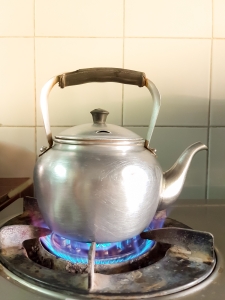
Picture this. It is just before seven in the morning in a fifth-floor apartment in Mirpur. A woman lights the burner on her stove, and a small, steady flame appears — blue, almost weightless. A kettle goes on. Tea is poured. Somewhere down the corridor, a child is being readied for school.
The flame is unremarkable. It is also, in a quiet way, the most consequential thing in the kitchen.
Transition from Natural Gas pipeline to LPG cylinder
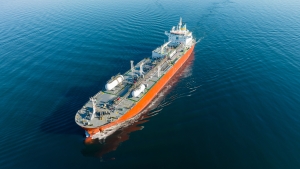
A decade ago, that same flame would almost certainly have come from a pipe running beneath the city — natural gas drawn from fields in Sylhet or Bhola, delivered by a network laid down over half a century. Today, the gas in that burner has travelled on a very different road. It has come from a refinery thousands of miles away, ridden the sea in a pressurized steel hull, been transferred at a port on the Bay of Bengal, filled into a cylinder, and carried up five flights of stairs on the shoulder of a young man whose business card simply reads “Delivery.”
Multiply that kitchen by tens of millions. That is the energy transition of Bangladesh — not a single act, but a daily, domestic, almost invisible one, happening in homes from Tetulia to Teknaf, every morning of every week.
The Inheritance
To understand where Bangladesh is going, it helps to begin with the hand it was dealt.
Declining Domestic Natural Gas Resources
For most of its modern history, the country has run on its own natural gas. Domestic fields — generous when first found, less generous now — once supplied more than half of all the energy the nation consumed. Pipes ran from the gas fields to the cities. Households cooked on it. Industries fired their boilers with it. Power stations turned it into electricity. It was, for a time, a quiet sufficiency.
That sufficiency is thinning. Bangladesh’s proven reserves have been declining for years, and new household and industrial connections to the piped network have largely been paused. The arithmetic of depletion is patient but undeniable. Every cubic foot consumed today is one fewer for tomorrow, and the fields below the Bengal plains are not what they once were.
Large Population with Rapidly Growing Demand for Energy
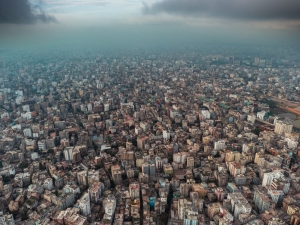
At the same time, the country above them is not what it once was either. Bangladesh today is home to roughly 177.5 million people, making it the world’s eighth-most populous nation. Its economy, with a nominal GDP of approximately $510 billion in 2026 according to IMF figures, has grown at a pace few in the world have matched. A middle class that numbered barely 12 million a decade ago is on track to triple. More homes, appliances, small factories, and restaurants. More heat, light, and movement.
The gap between a shrinking domestic supply and a swelling domestic demand is the inheritance. Everything that follows is a response to it.
The Pivot Already Underway
Most great transitions are noticed only in retrospect. Bangladesh’s is happening in plain sight, and yet it has been remarkably under-reported.
Rapid Increase in Demand for LPG
Consider the numbers. In 2015, the country consumed roughly 250,000 metric tonnes of LPG in a year. By 2018, that figure had passed one million. In 2025, according to figures from the National Board of Revenue, imports reached approximately 1.47 million metric tonnes, and industry leaders project the market may approach three million tonnes by the end of the decade. In the span of a single decade, a fuel that was a curiosity has become a necessity.
LPG Meets Domestic Needs Without Barriers
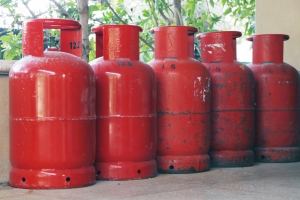
The reasons are not mysterious. With the piped gas network closed to new connections, Bangladeshi households needed something to cook with. LPG — propane and butane, compressed into a portable steel cylinder — was simply there, available, and increasingly affordable. It required no pipeline, no permission, no waiting list. A family could buy a cylinder one day and cook on it the next. For a country of fast-growing cities and dense villages, this was not a small thing. It was a quiet emancipation from the limits of pipe and grid.
LPG – Opportunities for Growth in Bangladesh
Today, LPG sits in roughly ten million Bangladeshi homes. Roughly half of every tonne imported goes to a kitchen. The rest goes to small industries — ceramics, textiles, food processing — and to auto-gas stations serving the country’s growing fleet of three-wheelers and light vehicles. It is also worth noting that the entire import trade is conducted by the private sector. These companies have built, almost from scratch, a national fuel system that did not meaningfully exist twenty years ago.
This is not a story of a country running short. It is a story of a country quietly rewiring how it gets warm, how it cooks, how it makes things. And it is happening, for the most part, without fanfare.
Routes that Define the Future
Here the story turns outward, to the sea.
Because Bangladesh produces almost none of the LPG it consumes — roughly 95 percent is imported — the question of where the molecules come from, and how they get here, is not a technical footnote. It is the defining strategic question of the decade.
Watch over the coming weeks for the rest of our exploration of Bangladesh’s Energy Transition. We will look closely at how shifting trade routes can define the future, while also examining the opportunities developing in the LPG market in Bangladesh in coming decade.
Bangladesh’s Energy Transition: Part One
By Westlark’s APAC (Asia Pacific) Team