Strategic Moves in the Energy Market
Strategy and the Game of Risk
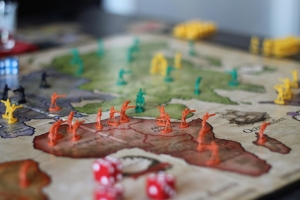
Have you ever played the board game Risk?
One of the best ways to describe Risk is that it is a military style board game where the objective is for one player to conquer the entire world. There is no actual violence (at least, there shouldn’t be), and all of the “victories” are decided by a roll of the dice. While chance does play a part in this game, strategy is vital.
Part of an effective strategy involves breaking up, or diverting, your opponent’s ability to have a unified army. One strategy that Risk board game players may be familiar with is that of cutting off access between Asia and Australia. This is also a strategy which has our focus for this month’s Current Event.
OPEC – Issues with Iraq
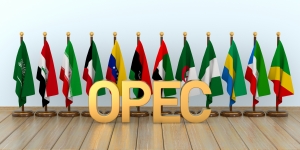
A recent Dow Jones Energy article had this headline: “OPEC’s Next Test Will Be Keeping Iraq on the Team.” Why is this issue a focal point for the oil cartel right now? Andrew Critchlow explains at the beginning of his brief article.
Iraq wants a bigger share of the OPEC pie but may have to wait. The group’s second-largest producer after Saudi Arabia is seeking an increase to its baseline production quota of just over 4.8 million barrels a day.
Traditionally, an OPEC member balking at production quotas wouldn’t be as large of an issue because the market would expect that Saudi Arabia could provide some way to appease them while still maintaining their position of dominance in the cartel. However current circumstances may be different.
Moves Across the Board
With the capture of Venezuela’s president by the United States, this OPEC member nation has come under the control of the U.S. This has caused many to speculate that the country’s oil production may be more heavily influenced by the U.S. rather than by OPEC.
During the U.S.-Iran war in the second quarter of 2026, the United Arab Emirates made a public decision to depart from the OPEC cartel. And Iran, another long-time member of OPEC, may have found a way in their negotiations with the U.S. to allow their production quotas to come outside of OPEC’s control.
What this could mean for the Global Energy Market
Losing Venezuela, UAE, and potentially Iran, means that OPEC’s overall volume control within the global oil market has dwindled. It also means that keeping existing members happy could come at a higher cost. Which brings us all the way back to Iraq.
The early July meeting of OPEC may provide a telling a story of how much leverage Iraq truly has. It may also reveal how much the major power player – Saudi Arabia – will bend to keep the cartel intact, and under their control. With the three former members – Venezuela, UAE and Iran – not true OPEC participants, we see the power of the cartel waning. This opens the door for a broader push for producers to directly market their product within the global market.

Conclusion
The idea of an open door for producers grabs our attention. A larger number of producers who are NOT engaged in a cartel presents the possibility of higher overall production. Should this materialize, then it would create a more bearish situation for oil prices.
However, before we say that we are “bearish” on the crude market, let’s clarify a few things. First, we would need to see OPEC exercising less power over a portion of the world’s oil production, before taking a bearish stance. So far, we haven’t seen that . . . yet. Second, this situation is one we are watching to see what may, or may not, develop. The outcome is still uncertain, but we are observing the markets and advising our clients so that will not just survive, but thrive – no matter how the global market shifts.
Current Events – July 2026
By JD Buss