

Hedging 301 – Part Five: Financial Options – More Strategies Using “Call” and “Put”
Flexible Tools to Manage Price Risk
As we wrap up our Hedging 301 series, we would like to highlight the theme of these posts – the flexibility of financial options. Financial options are versatile tools to have in your supply portfolio toolkit.
At the beginning of this series, we identified the key components of financial options. Then we illustrated how to use both call and put options to perform basically the same function in a supply portfolio. We ended our previous post by saying we would identify other creative ways to use financial options, and that is exactly what we will do in this post.

1. Price Range Creation
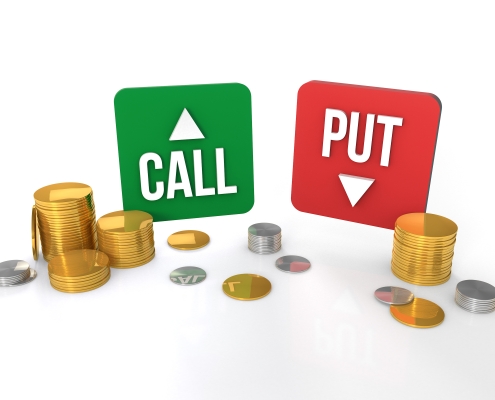
Because call and put options provide protection either above or below certain price points, it is possible to put these two tools together to create your own price range. Before demonstrating this strategy in our example, we need to provide a couple definitions that are common in all financial option markets.
- ATM = At-the-Money
This refers to a strike price for a call or put option that is very close to the current market price of the underlying commodity. For example, if crude oil is trading at $70 per barrel, then an ATM call option would have a strike price very close, or at the same level as that price.
- OTM = Out-of-the-Money
As the name implies, this strike price for a call or put option is beyond the current price of the underlying commodity. Using the same example with crude oil, a $75 per barrel strike for a call option in crude would be considered OTM because prices must rise a considerable amount for the call to be profitable.
Creating a Price Range Using OTM Financial Options
Let’s quickly review how to create a price range using two OTM financial options. For this example, we will shift to using propane as the underlying commodity.
- Current market for a future January contract period is $.80/gallon
- A call option for $.90/gallon costs $.05/gallon
- A put option for $.70/gallon costs $.05/gallon
With these three pieces of information, we can show that a retail distributor could purchase BOTH the call and put options for a total of $.10/gallon. This purchase then implies that the distributor will be protected from prices rising above $.90/gallon OR falling below $.70/gallon.
2. Buying Both ATM Calls and Puts
This strategy is almost the inverse of the earlier strategy. Instead of buying options that are OTM, the retail distributor is buying options with a strike price equal to, or very close to, the current market. These are normally more expensive, but they allow the retailer to be unconcerned about the possibility of prices either rising or falling.
Buying Both ATM Calls and Puts
Here is how this strategy would look.
- Current market for a future January contract period is $.80/gallon
- A call option for $.80/gallon costs $.10/gallon
- A put option for $.80/gallon costs $.10/gallon
Regardless of where the January contract price moves, the retail distributor will receive some form of financial payout. If prices move to $1.00/gallon, they will receive a payout on the $.80/gallon call while receiving no payout on the put option. Conversely, if prices drop to $.60/gallon, the retail distributor will receive a payout of $.20/gallon on the put option and nothing on the call option.
This strategy has greater payout possibilities but higher costs as well. If you are expecting highly volatile future prices this could be an optimal strategy.

Conclusion
Financial options can be highly versatile. They can be used to protect and enhance margin, and even as a part of tax strategies. Whatever your situation, financial options could play an important role in your supply portfolio.
As we close our Hedging 301 series on financial options, we hope you have gained a better understanding of how these tools function and how they can be incorporated into a supply portfolio.
Hedging 301 – Part Five: Wrapping Up With Two More Strategies
By JD Buss