
A Journey Through Decades of Energy Transformation
In December 2025, we began a journey through the decades of India’s transforming energy market. In Part One, we looked at the “Kitchen Revolution,” following the path from firewood and biomass to biogas (Gobar gas), to widespread use of LPG.
And the LPG story is not complete. Economic barriers stand in the way of sustained use. However, the trajectory is clear. A country that moved 97% of its rural population off biomass cooking in just three decades has demonstrated its capacity for transformation at scale.
For the energy sector, India isn’t just a market—it’s a masterclass. In scale, complexity, and what’s possible when policy, technology, and human aspirations align.
Part Two: Heating in a Warming Climate
Firewood, Coal, & Biomass
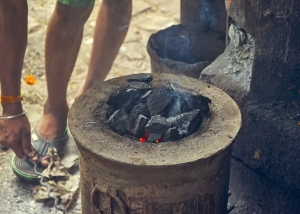
India’s heating story differs fundamentally from that of temperate nations. With tropical and subtropical climates covering most of the country, space heating was historically limited to the Himalayan regions and winter months in the northern plains. Traditional heating relied on the same fuels used for cooking: firewood, coal, and dried dung burned in open fires or rudimentary stoves.
In northern India, the Angithi—a small coal or wood-burning charcoal stove—was a fixture of winter life. Families would gather around these portable heaters, often bringing them indoors despite the carbon monoxide risks. In Kashmir and the Himalayan states, the Kangri (a portable earthen pot filled with burning charcoal) and Bukhari (wood-burning stove) provided essential warmth during harsh winters.
Water Heaters: From Firewood to Electricity to Solar Power
Water heating followed a similar trajectory to cooking fuels. Wood-fired boilers gave way to electric geysers and, increasingly, solar water heaters. India now has over 21 million square meters of solar water heating collector area installed, reducing electricity demand for one of the most energy-intensive household activities.
Looking Forward: The Unfinished Revolution
As India develops and expectations rise, heating demand will grow—not shrink. Air conditioning, which is thermodynamically similar to heating (just in reverse), has exploded. It has increased from about 2% household penetration in 2006 to over 10% today. Projections suggest usage could reach 40% or higher by 2040. The electricity demand implications are enormous, making the source of that electricity—coal, gas, nuclear, or renewables—one of the defining energy questions of India’s future.
We will continue exploring India’s energy transformation. In the coming weeks, we will examine the changes in India’s transportation sectors, and how these changes impact today’s energy markets.

India’s Fuel Revolution: Part Two
By Kevin Josh